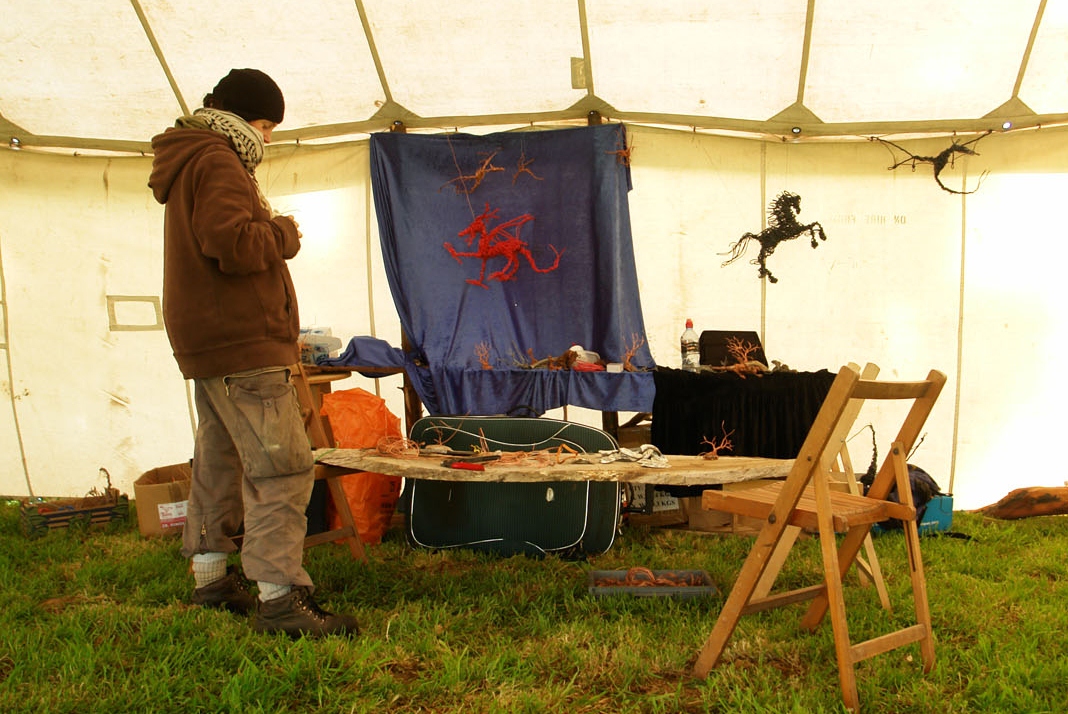
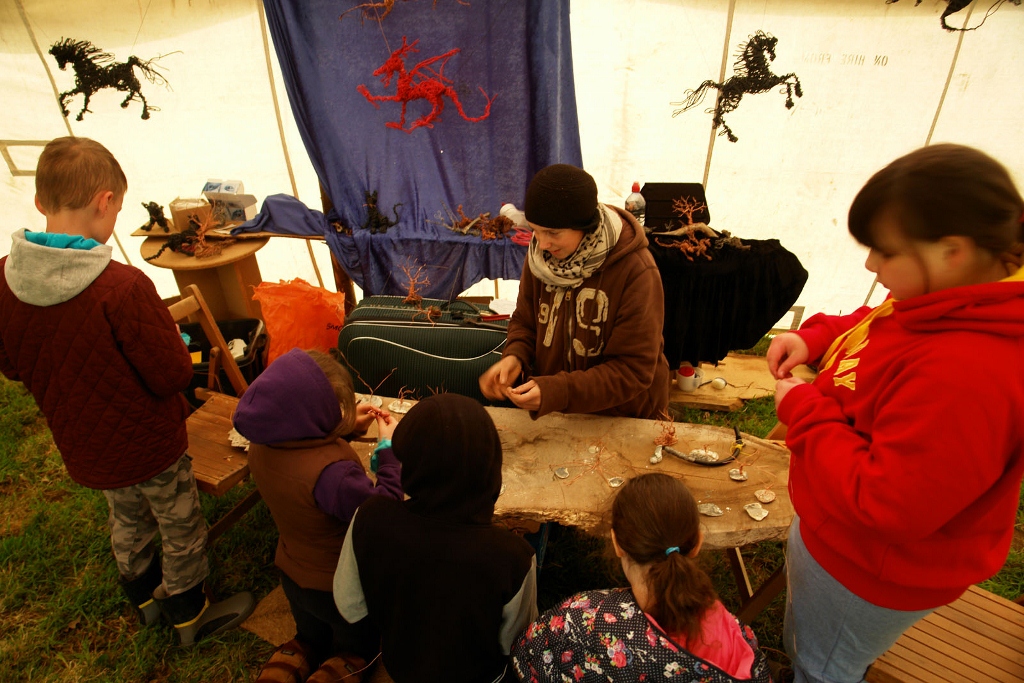
The phrase “three-dimensional scribbling is my favourite. I just wrap it around itself, see? Hard to describe, easy to show. I have run classes in manipulating wire (and drawing/painting/carving), one-on-one or in small groups, but this needs good planning to be satisfying, and expectations need to be managed! In September, you can come and see for free as I sit in St Michael’s and All Angel’s Church, Kingsland (HR6 9QW), during H-art week. Get in touch by e-mailing jed2f4 at yahoo dot co dot uk. I hear that £20 an hour is a fair rate for lessons, with some materials provided. It’s free to hang out in the Kingsland church though!
Materials
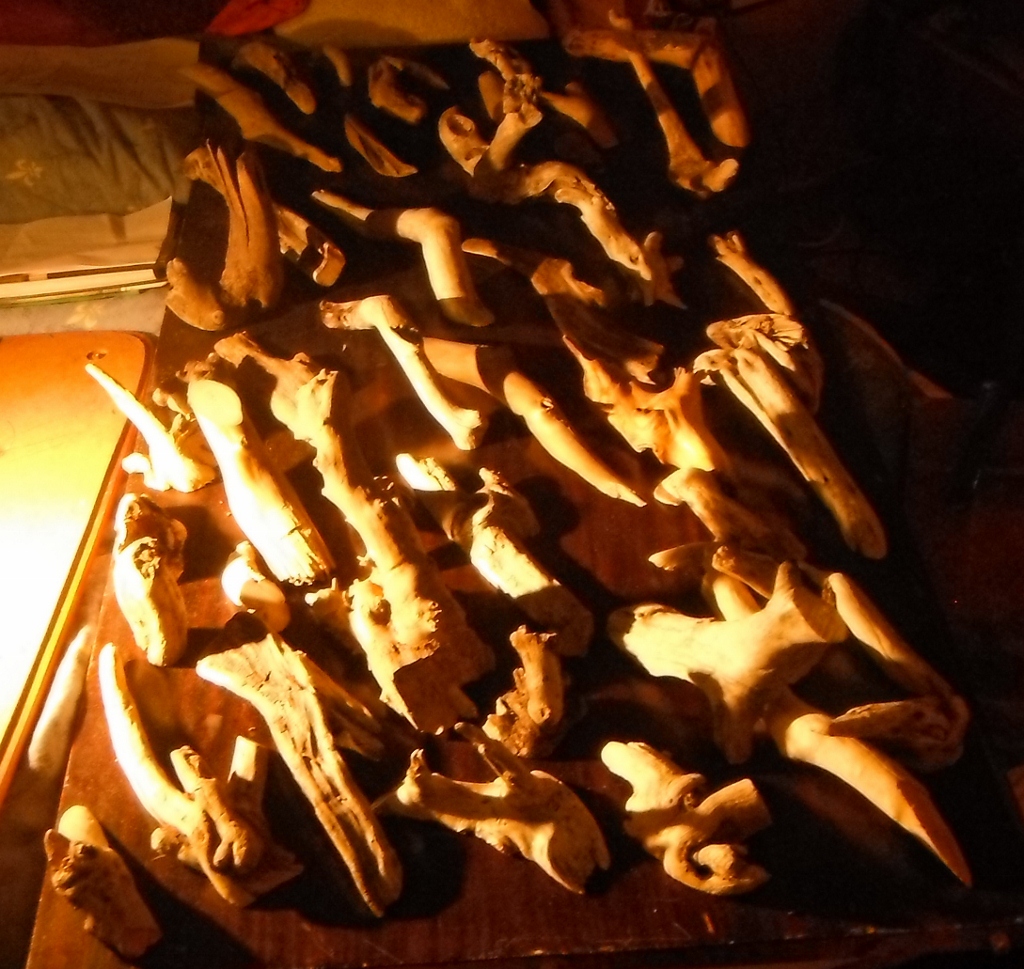
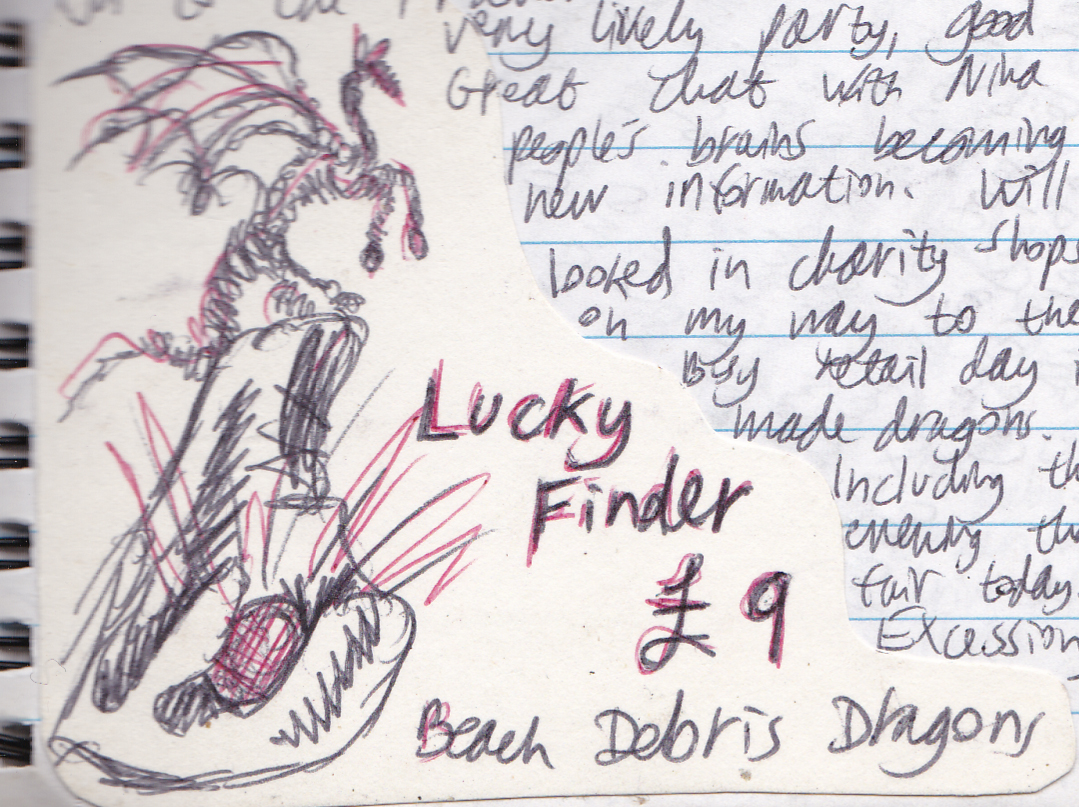
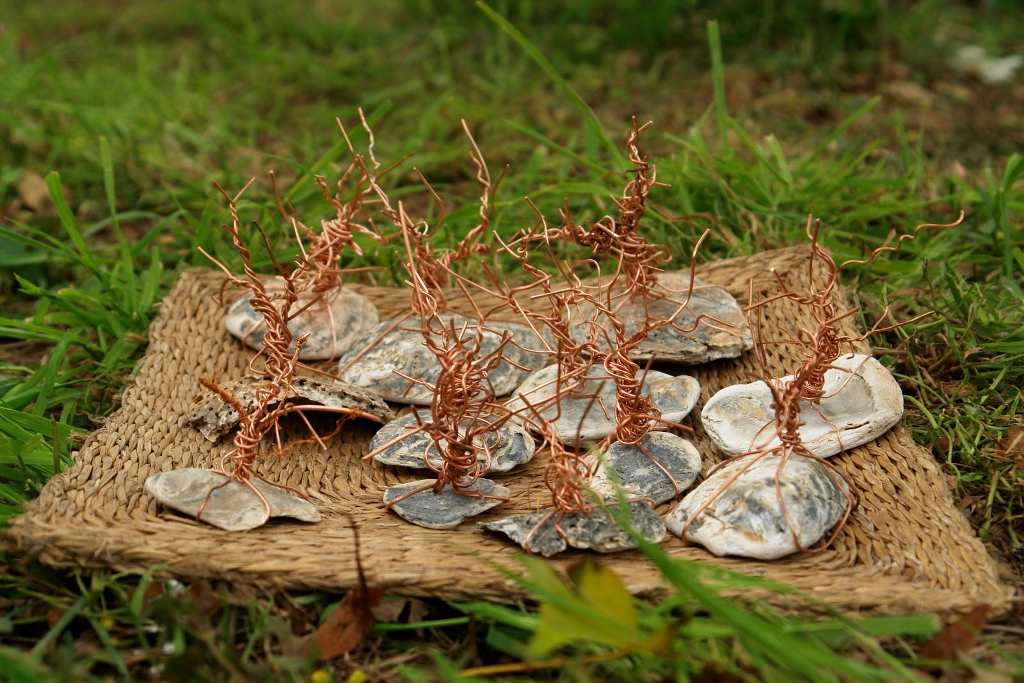
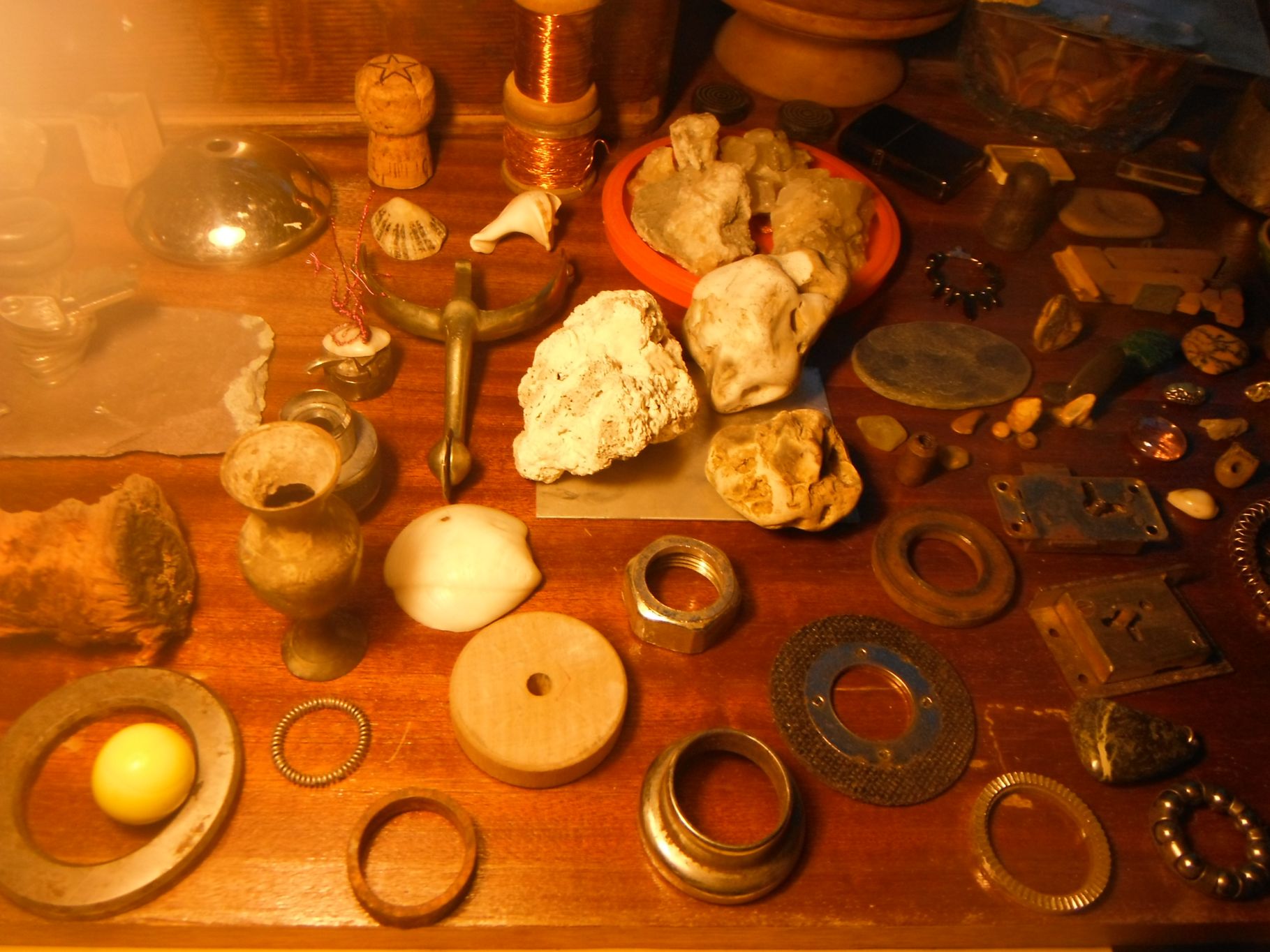
Apart from the wire itself, stripped or unstripped, fine or fat, I very often incorporate beach debris. Driftwood, bones or shells from the beach are brought home, cut into islands and wire is wound in. Sometimes I use super-glue, but I try to minimise it. Often I use Polyurethane Varnish, because without that the wire would brown then green. Sometimes I deliberately leave things unvarnished, because people want that tarnishing over time, but most things for-sale-now on this website are varnished, because for an honest internet shop they need to stay looking like they looked when photographed for here.
Ethics
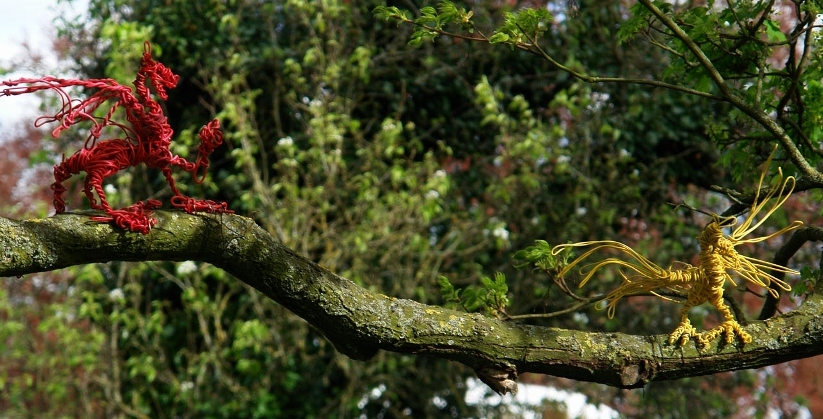
All the wire I use is post-consumer waste. The fat ‘house wiring’ wire comes from houses that were being rewired and the fine wire comes from old vacuum-tube televisions, hoovers, hair driers, washing machines, electric drills…
This copper-wire could be recycled again if the piece becomes so crushed, or the owner becomes so poor that they decide to weigh it in! Copper has peaked at about a thousand pounds a tonne over the last 15 years, and rarely goes below £600 a tonne.
I have often been part of house-renovation work, one of the perks of which is the old wire. Most of my wire was found, some even just dumped somewhere, by the side of the road or in the woods. Only once have I bought wire in (at scrap value from a scrap yard). This was when I spent one winter living in Hebden Bridge in West Yorkshire, and decided to do some making and selling, but couldn’t find enough old TVs on the street to get going. The flat-screen revolution had passed – all the old tube-TVs had left the region!
 The big things I make are sometimes freestanding, but I mostly mount my trees and creatures on woodland or beach-debris; the pretty pebbles, driftwood, sea-battered lumps of plastic or metal, bits of old buoys and boots etc that I could pick up on walks along the sea-shore.
My home-shore was the mouth of the River Spey in Morayshire Scotland, until I was 17 years old.
When I left home to stay to Edinburgh in 1997 I discovered the Firth of Forth beaches of Aberlady Bay, Cramond and Burnt Island. These provided an enormous amount of “sea glass” and much more intricate and beautiful shells than I was used to from the shell-smashing shinglery of the Moray Firth. With the sea-glass I constructed arches and towers which I sold to table-gamers to be part of the intricate table-top worlds some people play games upon, and others just have as things of beauty. Toy train-set tables were the 1950s version of this, I reckon, but games like Warhammer or Space 40,000 from the Games Workshop (based in Nottingham when I was a kid in the 1980s, but probably very international by now) give a lot more scope than running the railway in a table-top world.
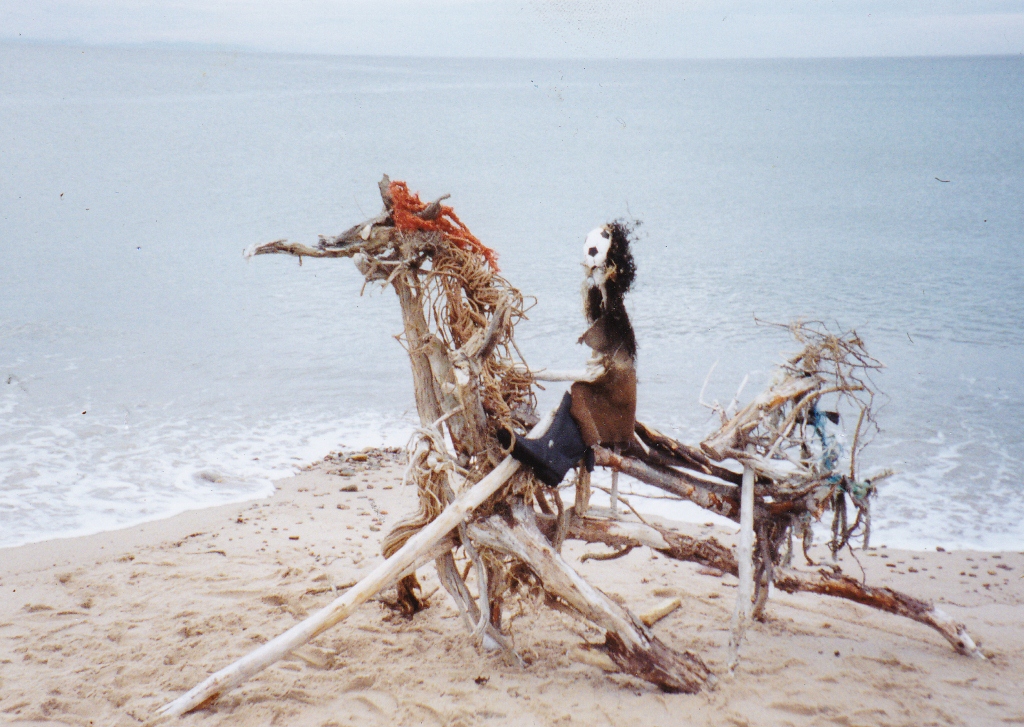
Anyway (I digress) I was talking about objects on which to mount my art. It is particularly satisfying to see in a non-biodegradable lump of old shoe, a unique and beautiful thing that could provide a base for a unique and beautiful wire tree or creature. The environmental disaster of plastic waste in sea and shores is a well documented horribleness ( https://www.youtube.com/watch?v=7UM73CEvwMY ) and my miniscule footprint makes little difference, but short of making enough money to give lots to Black Fish http://www.theblackfish.org/campaigns/ what else could I do? Seriously – what else is being done? – please e-mail me more links if you know of any other initiatives to help clean up the seas and shores.
Since 2011 I have lived in the relatively land-locked borderlands of Herefordhsire/Shropshire/Powys, so I’m no longer quite so beach-debris focused in my flotsam-finding. Digging about round here does provide excellent weird old lumps of wood, glass, rusty old scrap metal dumpings/droppings and the odd fossil though, so I’ll never be short. My parents still live by the mouth of the River Spey, and I still return to that home every year or so, picking up a choice sack of driftwood while I’m at it.
The River Spey and the North Sea batter and smooth wood perfectly, given long enough. When I was young I thought all shore lines had this, but I now realise that I was particularly lucky to grow up in this floodplain, which some reckon to be the most active floodplain in Europe. This means the river changes its sinuous bed within the wide choice of the floodplain every year, sometimes very dramatically. All that shingle action (The River Spey is basically demolishing the Grampian Mountains/Cairngorms, and putting them into the North Sea in handy round lumps – this job will take another 80,000 years at least) is noisy and beautiful, constant and abundant, but it’s still technically illegal to take stones or sand from the beach. If a lorry were to arrive with a digger to scoop beach away, I hope that some sort of shore-bailiff would be along, but I’ve never seen a hand-powered individual get any hassle. In the villages of Garmouth, Spey Bay and Kingston-on-Spey where I grew up, many walls and even some houses are made of shingle from the beach, and my dad and I even had some paid work repairing, creating or demolishing these. There have been times when I’ve taken shingle back to the beach, after it’d had a holiday in a wall in the village for maybe 500 years. (No kidding – Garmouth was a significant ship-buidling community (see Spey Built by Jim Skelton https://henryrobb.wordpress.com/2011/01/20/speybuilt/) in the 15-1700s, until one year the River Spey changed everything and wiped the docks out of possibility)
Glue
The element of my work that I know the least about is the glue that I sometimes buy, to stick wire to wood/metal/plastic/ceramic/glass. The origins of glue vary enormously from basically harmless cooking, to hugely polluting and unsustainable mining. I have not made a deep enough study to decide on which glue would be best for me and my wider (global) environment, but I bet someone has. Please e-mail me a link to an eloquent study if you know of one. I’m sure the polyurethane varnish I now often use, as part of my e-commerce is an environmental disaster, but things sold online have to look the same when photographed for the website and arriving in a parcel, maybe years later.
Solder – No thanks
Many people have suggested it, but I am not interested in needing the raw materials, time, skill or electricity that soldering would require of me. I don’t use pliers either, and I only occasionally use snips. In the happily-homeless years of my life I could get by on just the screwdriver on my pen-knife (to get into the machines people dumped in woods, pavement, shore, carpark…), and not needing any other tools apart from my hands and imagination is very satisfying to me. I was also very cheap. These days though, after years of cheerful homelessness by design, I am paying rent for the first time in seven years, so my prices have rocketted from my humble beginnings.